


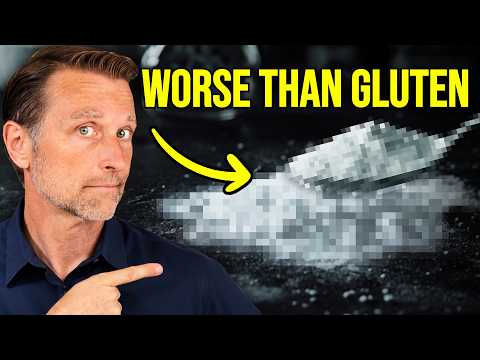

The real danger in bread isn’t the gluten. In this video, we’ll explain why bread can be unhealthy, how it affects insulin and blood sugar, and what you can eat instead if you decide to stop eating bread.
Just so you know, my full line of high-quality supplements is available on Amazon — search Dr. Berg Supplements.
0:00 Introduction: Why bread is unhealthy
1:14 The bread blood sugar spike
1:50 The gluten myth
2:54 Bread dangers
6:37 Is whole wheat bread healthy?
7:40 Gluten allergies
8:22 Modern wheat dangers
Download Dr. Berg’s Free Daily Health Routine: https://drbrg.co/4bNjKlu
Discover healthy bread substitutes and more healthy recipes here: https://drbrg.co/4rtB0AR
Watch next to uncover the real problem with modern wheat and other hidden sources of starch in today’s diet:
▶️ https://youtu.be/3Mo1F8ce1yY
▶️ https://youtu.be/Uw21AZN7Ulc
▶️ https://youtu.be/FcW3xFUCClQ
Bread is mostly starch, which is a chain of glucose molecules. Even if the label says zero grams of sugar, that starch is quickly broken down into sugar in your bloodstream.
Wheat is in many of the foods people eat regularly: pizza, cereal, granola bars, and more. The average American consumes wheat almost every day.
One of the biggest problems with bread is the blood sugar spike. In some cases, bread can spike your blood sugar even more than table sugar, despite being labeled as having zero sugar.
Gluten-free bread isn’t always a healthier option. Many gluten-free breads are made with potato starch, rice flour, tapioca starch, or cornstarch instead of wheat flour. These ingredients can spike blood sugar just as much as, if not more than, regular sugar. The starch in bread doesn’t just affect blood sugar. It may also contribute to higher LDL cholesterol, fatty liver, and glycation.
When bread spikes your blood sugar, insulin is released to bring it down. But where does the excess sugar go? Much of it gets converted into stored fat in the liver and around the belly. Over time, repeated blood sugar spikes and high insulin levels can lead to insulin resistance.
While a small percentage of people have a true gluten allergy or sensitivity, for many others, the real issue with bread is the starch. Modern wheat has also been heavily hybridized and engineered to contain higher levels of gluten.
Dr. Eric Berg DC Bio:
Dr. Berg, age 60, is a chiropractor who specializes in Healthy Ketosis & Intermittent Fasting. He is the Director of Dr. Berg Nutritionals and author of the best-selling book The Healthy Keto Plan. He no longer practices, but focuses on health education through social media.
Follow Me On Social Media:
YouTube: https://www.youtube.com/@Drberg/
YouTube Shorts: https://www.youtube.com/@UCpWhiwlOPxOmwQu5xyjtLDw
Keto Recipes: https://www.youtube.com/@drbergketorecipes
Facebook: https://www.facebook.com/drericberg
Instagram: https://www.instagram.com/drericberg/
Spotify Podcast: 🎧 https://drbrg.co/DrBerg-Spotify
TikTok: https://www.tiktok.com/@drbergofficial
X: https://x.com/dr_ericberg
Disclaimer:
Dr. Eric Berg received his Doctor of Chiropractic degree from Palmer College of Chiropractic in 1988. His use of “doctor” or “Dr.” in relation to himself solely refers to that degree. Dr. Berg is a licensed chiropractor in Virginia, California, and Louisiana, but he no longer practices chiropractic in any state and does not see patients, so he can focus on educating people as a full-time activity, yet he maintains an active license. This video is for general informational purposes only. It should not be used to self-diagnose, and it is not a substitute for a medical exam, cure, treatment, diagnosis, prescription, or recommendation. It does not create a doctor-patient relationship between Dr. Berg and you. You should not make any change in your health regimen or diet before first consulting a physician and obtaining a medical exam, diagnosis, and recommendation. Always seek the advice of a physician or other qualified health provider with any questions you may have regarding a medical condition.
#health #keto #ketodiet #weightloss #ketolifestyle #intermittentfasting #lowcarb
Thanks for watching! I hope this helps you understand bread dangers so you can make better choices for your health. I’ll see you in the next video.
