


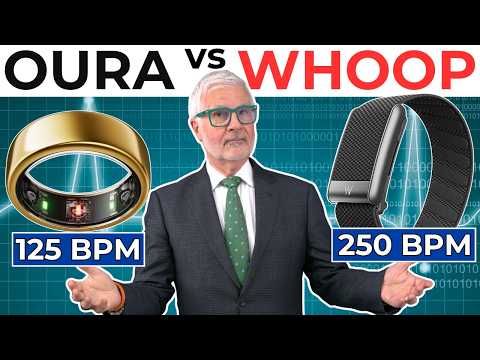

Fitness trackers like the Oura Ring, Whoop Band, and Apple Watch are packed with data, but Dr. Gundry warns that most people have no idea what these numbers actually mean—and in some cases, the devices might be "lying" to you.
In this episode, Dr. Gundry breaks down exactly which metrics are worth paying attention to and which ones are totally inaccurate. He compares his own data from the Oura Ring and Whoop Band side-by-side to reveal shocking discrepancies in Deep Sleep scores and heart rate accuracy.
📉 The Metrics You Are Likely Misinterpreting:
The HRV Paradox: Most people think a steady heartbeat is healthy, but Dr. Gundry explains why "variability" is the secret to a resilient nervous system—and what it means when this number drops.
The Resting Heart Rate Red Flag: Why you should ignore your daily number and focusing on this specific "trend" that signals you might be getting sick.
Sleep Latency Myths: Think falling asleep instantly is a good thing? Dr. Gundry explains why "under 5 minutes" might actually be a warning sign.
00:00 – Intro: Oura vs. Whoop vs. Apple Watch
01:51 – What is HRV? (And Why Higher is Better)
06:50 – Resting Heart Rate: The Ideal Range
08:01 – Sleep Latency: How Fast Should You Fall Asleep?
09:00 – The "Deep Sleep" Lie: Why Oura & Whoop Disagree
12:24 – Warning: Step Counts Are "Totally Inaccurate"
13:00 – Whoop’s "Strain" Score Explained (Sweat vs. Stress)
16:00 – The Heart Rate Glitch: 125 vs. 205 BPM?
17:51 – Apple Watch & VO2 Max (Cardio Fitness)
19:35 – Biological Age: Which Device Says I’m Younger?
#FitnessTracker #OuraRing #Whoop #AppleWatch #HRV #SleepTracking #Biohacking #DrGundry #HealthTech #VO2Max
