



Many people think of mathematics as a tool created by humans, yet mathematical relationships existed long before anyone wrote them down. The circumference of a circle related to its diameter before the first civilization emerged. Numerical proportions governed natural processes before the first language was spoken. Mathematics was discovered because the relationships it describes were already present within nature.
What makes mathematics so remarkable is that it appears throughout every level of reality. The same constants used to describe physical laws also appear in the geometry of natural systems. Wave behavior, resonance, frequency, and motion all follow mathematical relationships that can be expressed through proportion and geometry.
These relationships influence the behavior of gravity, electromagnetism, and the nuclear forces, helping shape the structures that emerge throughout the universe. As energy organizes itself through frequency and resonance, geometric patterns arise naturally. Many of these patterns appear as fractal structures, repeating similar forms across vastly different scales.
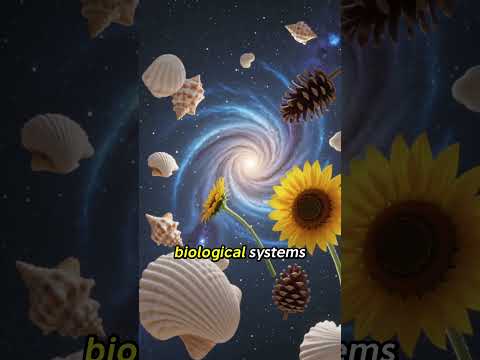
The same principles can be observed in galaxies, biological systems, crystalline formations, and energetic fields. Mathematics provides a way of understanding how form emerges from underlying relationships and how order is preserved across scales despite enormous differences in size and complexity.
As these connections become more visible, mathematics begins to resemble a foundational architecture woven into reality itself. Geometry serves as the bridge between frequency and form, allowing invisible relationships to become visible structures. Through mathematical constants and universal proportions, reality continuously expresses coherence across scales, revealing a framework through which the observable and the unobservable remain connected within a single geometric order.
