


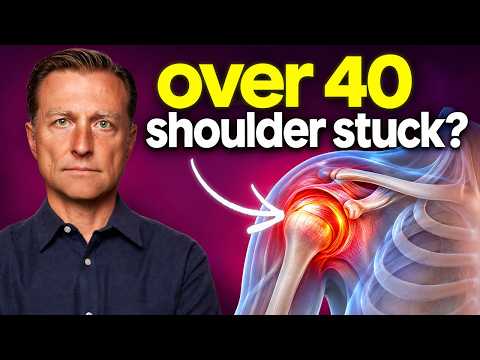

Frozen shoulder is most common in women between the ages of 40 and 60, but what’s really affecting shoulder mobility as you age? Discover the connection between estrogen, progesterone, and joint pain, plus the surprising causes of referred shoulder pain.
Download Dr. Berg’s Free Daily Health Routine: https://www.drberg.com/lp/daily-body-reboot-checklist
🌟 Take Dr. Berg’s New Health Quiz—60 seconds is all it takes: https://www.drberg.com/lp/total-environments
Just so you know, my full line of high-quality supplements is available on Amazon — search Dr. Berg Supplements.
0:00 Frozen shoulder after 40
0:14 Your fascia and shoulder stiffness
1:40 Referred shoulder pain
2:08 Progesterone and joint pain
2:48 Vitamin D deficiency and menopause
3:38 Hormone replacement therapy
3:51 The importance of bile
4:13 Magnesium and vitamin D
4:21 How to fix frozen shoulder
5:45 How to identify gallbladder shoulder pain
Check out these natural pain relief tips for managing pain in the meantime: https://www.drberg.com/blog/7-amazing-pain-relief-hacks-that-give-instant-results
Keep watching for more ways to reduce joint pain and support your health as you age:
Fascia is the connective tissue that surrounds your muscles and organs. It contains receptors for estrogen and progesterone, which may help explain why frozen shoulder is most common in women between the ages of 40 and 60.
Progesterone begins to decline 8 to 10 years before menopause. During this hormonal shift, the adrenal glands work harder to compensate. They rely on cholesterol, the raw material needed to produce hormones, bile salts, and vitamin D.
Low cholesterol can affect bile production, potentially contributing to bile sludge and gallbladder problems. Irritation involving the phrenic nerve can also cause referred shoulder pain.
Shoulder stiffness and joint pain may be directly related to changes in the fascia as progesterone declines. Hormonal shifts, insufficient cholesterol, and stress on the adrenal glands may all contribute to the problem.
Adequate cholesterol helps provide the raw materials for hormone production during perimenopause and menopause. Vitamin D deficiency may make these problems worse.
To help reduce frozen shoulder and other joint pain after menopause:
1. Increase cholesterol intake.
2. Take 10,000 IU of vitamin D with vitamin K2 and magnesium.
3. Take ox bile or TUDCA.
DATA:
https://pmc.ncbi.nlm.nih.gov/articles/PMC13745816
https://pmc.ncbi.nlm.nih.gov/articles/PMC13668668/?
https://pmc.ncbi.nlm.nih.gov/articles/PMC8896272/
Dr. Eric Berg, DC, Bio:
Dr. Berg, DC, age 61, is a chiropractor who specializes in Healthy Ketosis & Intermittent Fasting. He is the author of the best-selling book, The Healthy Keto Plan, and is the Director of Dr. Berg Nutritionals. He no longer practices but focuses on health education through social media.
Follow Me on Social Media:
YouTube: https://drbrg.co/drberg
YouTube Shorts: https://www.youtube.com/@drbergshorts
Keto Recipe: https://www.youtube.com/@drbergketorecipes
Facebook: https://www.facebook.com/drericberg
Instagram: https://www.instagram.com/drericberg/
Spotify Podcast: 🎧 https://drbrg.co/DrBerg-Spotify
TikTok: https://www.tiktok.com/@drbergofficial
X: https://x.com/dr_ericberg
Disclaimer:
Dr. Eric Berg, DC, received his Doctor of Chiropractic degree from Palmer College of Chiropractic in 1988. His use of “doctor” or “Dr.” in relation to himself solely refers to that degree. Dr. Berg is a licensed chiropractor in Virginia, California, and Louisiana, but he no longer practices chiropractic in any state and does not see patients so he can focus on educating people as a full-time activity, yet he maintains an active license. This video is for general informational purposes only. It should not be used to self-diagnose, and it is not a substitute for a medical exam, cure, treatment, diagnosis, prescription, or recommendation. It does not create a doctor-patient relationship between Dr. Berg and you. You should not make any change in your health regimen or diet before first consulting a physician and obtaining a medical exam, diagnosis, and recommendation. Always seek the advice of a physician or other qualified health provider with any questions you may have regarding a medical condition.
*Dr. Eric Berg, DC, is not AI-generated. AI-enhanced elements may be used in this video for production purposes only.
#health #keto #ketodiet #weightloss #ketolifestyle #intermittentfasting #lowcarb
Thanks for watching! I hope this helps you better understand frozen shoulder and how to relieve shoulder pain and stiffness. I’ll see you in the next video.
