


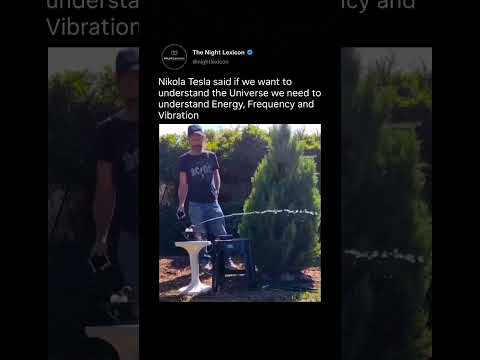

The effect comes from a simple alignment between vibration and capture speed, where a hose carries motion from a speaker and transfers it into the flow of water. When the oscillation sits near twenty four cycles per second and the camera records at the same rate, each frame samples the stream at nearly identical phases, so the movement appears to pause or trace repeating forms. Outside the camera, the water continues in a continuous path, but the recording reveals a structure that depends on timing rather than material change. Slight adjustments in frequency shift the sampled phase, which creates the impression of reversal or forward motion even though the underlying flow remains steady. This reveals a deeper pattern where perception organizes events through intervals and not through objects, and where what seems fixed or moving depends on how observation synchronizes with process rather than on the process itself.
🎥 @nightlexicon
#sound #vibration #frequency #strobeeffect
