


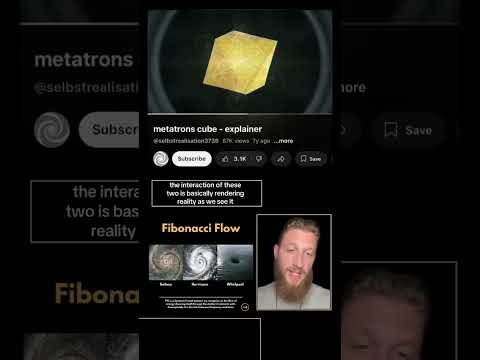

When first encountering sacred geometry, it is easy to dismiss it as just symbolism or mysticism. That reaction is understandable. Yet the deeper the study of mathematics, physics, biology, crystallography, astronomy, and natural systems becomes, the more geometry begins to appear as a fundamental language underlying them all.
Sacred geometry is less about mystical symbols and more about recurring mathematical relationships. The same proportions, symmetries, spirals, polyhedra, and geometric principles emerge in flowers, shells, crystals, galaxies, wave dynamics, molecular structures, and even the organization of living systems. These patterns are not imposed by human imagination. They are discovered throughout nature.
Ancient civilizations seemed to recognize that geometry expressed universal principles connecting form, proportion, and harmony. Their temples, monuments, and artwork often encoded mathematical relationships that continue to inspire investigation today. Whether through architecture, music, astronomy, or philosophy, geometry served as a bridge between observation and understanding.
The more one studies these connections, the harder it becomes to see geometry as merely decorative. It begins to reveal itself as one of the organizing principles through which nature builds complexity from simple rules. Mathematics becomes visible. Patterns become measurable. Form becomes the expression of deeper relationships.
Perhaps sacred geometry is simply the name given to the mathematics of nature when viewed with wonder. It reminds us that beneath the diversity of the universe lies an extraordinary coherence, where the same geometric language appears from the smallest structures to the largest scales of the cosmos.
🎥 @bassforge.us
#sacredgeometry #geometry #nature #mathematics #consciousness
