


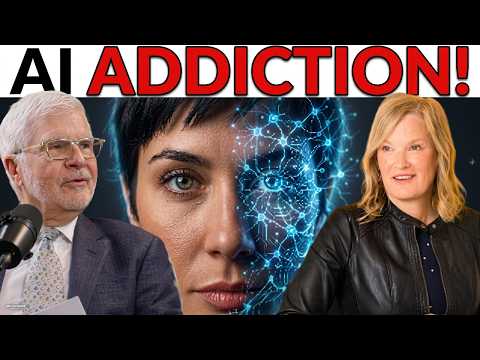

Dr. Gundry sits down with Dr. Vivienne Ming, neuroscientist and author of Robot Proof, who has spent her career building AI systems for healthcare and education. The research is clear: humans and AI make completely different kinds of errors — and when they work together, they’re smarter than either one alone. But that only works if you’re not outsourcing your critical thinking to your phone.
Vivienne walks through the neuroscience of why easy answers feel like learning, why you can’t just ask ChatGPT for your diagnosis and call it a day, and what she’s discovered about the students and patients who are genuinely using AI to become more informed instead of less. She reveals why doctors and cutting-edge AI systems make "complementary errors" (the research is from Nature), what proprioception has to do with how we think, and how to use AI to actually build understanding instead of outsourcing it.
00:00 — Why doctors and AI make DIFFERENT errors (and why that’s the secret to using both)
04:10 — The dangerous trap: why we ask AI for health advice and just DO WHAT IT SAYS
07:15 — The neuroscience of why easy AI answers FEEL smarter (but make you think less
13:45 — How to ACTUALLY build understanding with AI instead of just getting quick answers
20:00 — The collaboration model: smart person + AI beats the smartest anything alone
26:30 — The guardrails: when to trust AI, when to trust your doctor, how to make them work together
32:50 — "Dr. Google" syndrome: can AI really replace your actual physician?
37:30 — What doctors bring that NO AI can replicate (and why you still need them)
42:00 — Robot Proof: why your future needs critical thinking MORE than it needs AI
If you use AI for health decisions, education, or literally anything in your life, this episode reshapes how you should be thinking about it. Dr. Ming is an AI realist — not a utopian, not a doomsayer, just someone who’s studied how humans and machines actually work best together.
This episode references Dr. Ming’s book, Robot Proof: Why Your Future Needs You Even More Than You Need AI, available wherever books are sold.
QUESTIONS ANSWERED IN THIS EPISODE
What is an "AI realist" and why does it matter?
How do doctors and AI systems make different kinds of errors?
What does the Nature study say about humans and AI working together?
Why is proprioception relevant to how we think?
What’s the difference between "fast thinking" and "slow thinking"?
Why do easy AI answers feel like learning when they’re actually the opposite?
Can AI be a "magical oracle" for health decisions? What does the research say?
How are students using AI to hide their misconceptions from themselves?
What’s the "effortful thinking" problem and why does it feel bad?
#AI #Neuroscience #Healthcare #HealthAI #CriticalThinking #Learning #MedicalAI #DrGundry #DrVivienneMing #RobotProof #DrGundryPodcast #AIRealism
